Comparing a unified AI API to separate provider integrations
When multiple AI models mean multiple points of integration
Working with large language models, image generators, and other AI services often means managing several provider accounts, each with its own base URL, authentication method, and request schema. A developer who wants to use a model from one provider for text and another for image generation may end up writing and maintaining separate code paths for each. This is a familiar pain point, and it raises a practical question: is it better to connect to each provider directly, or to route everything through a single unified AI API?
The answer depends on the team, the project, and the degree of flexibility needed. A unified gateway can reduce overhead, but separate integrations offer direct control. Understanding the trade-offs helps in choosing the right approach.
How separate provider integrations work
Direct integration with each provider means building a custom connection for every service you use. For each provider, you set up a dedicated base URL, manage a separate API key, and learn that provider's specific request schema and response format. If you switch from one model to another within the same provider, the change may be small. But if you want to compare outputs from two different providers for the same task, you must write two different requests, handle two different authentication flows, and parse two different response structures.
This approach gives you full control. You see exactly how each provider behaves, and you can tune your code to take advantage of provider-specific features. For a team that works with only one or two providers and has no plans to expand, direct integration is straightforward and requires no intermediary.
However, the cost of this control is maintenance. When a provider updates its API, you must update your integration. When you add a third provider, you build another integration from scratch. Over time, the codebase grows with provider-specific logic, and testing each path becomes more time-consuming.
What a unified AI API provides
A unified AI API sits between your application and the underlying providers. Instead of calling each provider directly, you send all your requests to a single base URL. You use one authentication method, one API key, and one request schema for all models, regardless of which provider actually serves them. The unified API translates your request into the correct format for the target provider and returns a response in a common format.
This means you can change the model identifier in your request to switch from a text model on one provider to an image model on another without rewriting the call. Your code remains provider-agnostic. New models from any provider become available to you as soon as the unified API supports them, often without any change to your application code.
For a team that experiments with multiple models or expects to scale across many providers, this can save significant development time. The trade-off is that you rely on the unified API to maintain compatibility with each provider and to handle updates. You also may not have access to every provider-specific feature, depending on how the unified API maps those features.
Comparing the two approaches
To decide which path fits, consider a few practical factors. First, the number of providers you use now and expect to use in the near future. If you plan to work with three or more providers, the overhead of separate integrations grows quickly. A unified API reduces that overhead to a single integration point.
Second, the importance of provider-specific features. Some providers offer advanced parameters or custom response formats that a unified API may not expose. If you rely on those features, direct integration may be necessary.
Third, the time you have for maintenance. A unified API offloads the work of tracking provider API changes. If your team is small or your project timeline is tight, that can be valuable.
Fourth, the need for rapid experimentation. When you want to test a new model quickly, a unified AI API lets you do so by changing a single model identifier in your request. You do not need to write new integration code for each trial. This is especially useful in early-stage development or research.
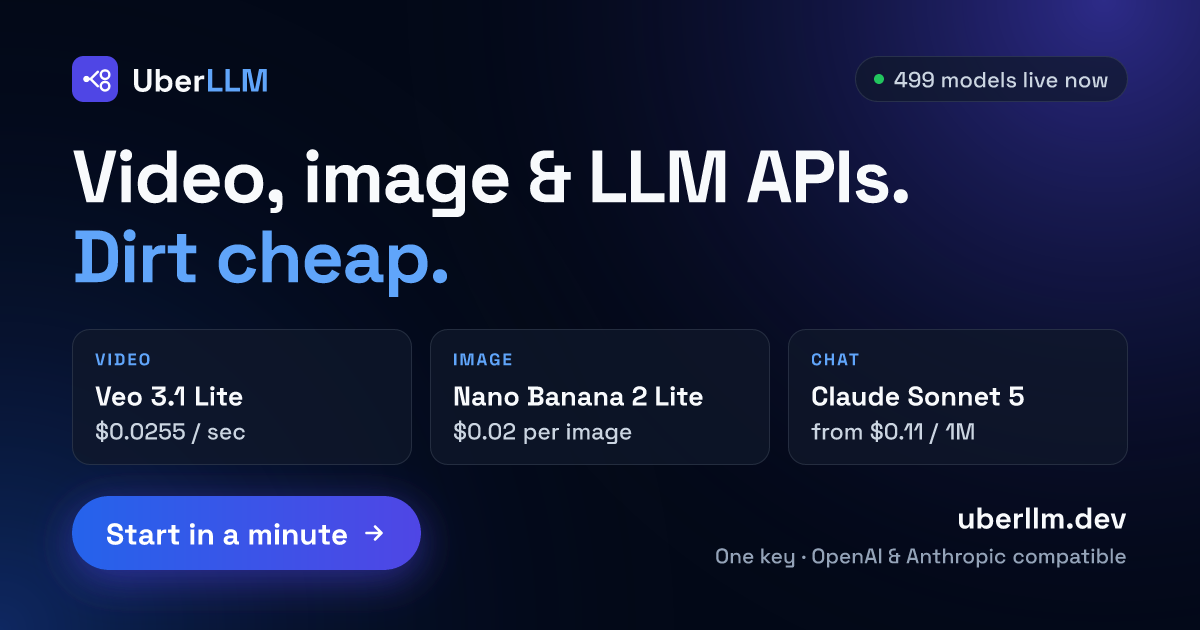
Finally, consider the cost of lock-in. With direct integrations, you are tightly coupled to each provider's API. Changing providers later requires code changes. With a unified API, you are coupled to the unified API's interface, but you can switch underlying providers without rewriting your application logic. That can be a net gain in flexibility.
When separate integrations make sense
Direct provider integrations work well when you use exactly one or two providers and have no intention of expanding. If your application depends on a specific provider's unique capabilities, and you have the resources to maintain that integration, there is little reason to add an intermediary. Similarly, if you need to use provider-specific SDKs or libraries that are not available through a unified API, direct integration is the practical choice.
Some teams also prefer direct integration for compliance or data handling reasons. If your data must not pass through an additional service, even a proxy, then a direct connection to the provider is the only option.
When a unified AI API is the stronger choice
A unified API becomes attractive when you work with multiple providers, expect to add new models frequently, or want to reduce the complexity of your codebase. The ability to use a single key for models across different providers simplifies authentication and request handling. It also makes it easier to fall back from one provider to another if a model is unavailable or returns an error, since your code does not need to know which provider the request actually reached.
For teams that build applications where model choice is a moving target, the unified approach reduces the friction of switching or adding models. You can treat the model identifier as a configuration parameter rather than a hardcoded endpoint. This is where the phrase a single key for models becomes a practical reality: one authentication token, one base URL, and a single request format let you reach models from multiple providers without managing separate credentials or request structures.
Another advantage is consistency in response format. When each provider returns data in its own shape, your application must parse each format separately. A unified API normalises those responses, so your parsing logic stays the same regardless of which model was called. That can reduce bugs and make your code easier to maintain.
Finding the right balance
There is no universal answer. Many teams start with direct integrations for a single provider and later adopt a unified API as their needs grow. Others begin with a unified API to keep their options open from the start. The key is to evaluate your current and near-future needs honestly.
If you value simplicity and speed of development, and you are willing to let an intermediary handle provider-specific details, a unified AI API is a natural fit. If you need direct control over every aspect of the provider interaction, separate integrations give you that control at the cost of more work. Both approaches are valid; the best one depends on your priorities.
Understanding the difference between these two patterns helps you make an informed decision. Whichever path you choose, the goal is the same: to build applications that use the right model for the task without being weighed down by unnecessary complexity.
Ends · BUILDWITHMODELS